
Every December, our phones get busier for the same reason: people realize their hearing benefits, deductible credit, or FSA balance may not follow them into the new year. If a hearing test or new hearing aids have been on your list, the next few weeks are worth a closer look. A little planning now can mean paying less out of pocket and starting the year hearing better.
This guide walks through what to check with your insurance plan and your FSA or HSA, why it helps to book early, and what to bring to your visit at any of our NYC Hearing Associates offices.
The short version: ask your plan whether you have a hearing aid benefit and when it renews, check whether you have already met this year’s deductible or out-of-pocket maximum, confirm your FSA deadline, and book your appointment early in December rather than in the last week of the year.
Want to use your benefits before they reset? Book a visit with our Doctors of Audiology
Or email us at info@nycears.com
Why the end of the year matters for hearing care
Many health plans, flexible spending accounts, and deductibles run on a calendar year. When January 1 arrives, your deductible usually starts over, an unused FSA balance may be lost, and some plan benefits restart on a new schedule. Hearing aids are a meaningful investment, so the timing of your evaluation and purchase can make a real difference in what you pay.
Every plan is different, though. The goal of this guide is to help you ask the right questions, not to promise a particular amount of coverage.
1. Check your insurance hearing benefit
Some commercial and employer plans, and some Medicare Advantage plans, include a hearing aid benefit. Plans that offer one often limit it to one set of hearing aids every few years, and a 36-month (three-year) cycle is common. Some plans measure that window from your last hearing aid purchase; others tie it to the plan year. If you have not used your benefit in the current cycle, or if it is about to renew, it is worth finding out now.
Call the member services number on the back of your insurance card and ask:
- Does my plan include a hearing aid benefit, and how much is it?
- How often can I use it, and when did I last use it?
- Does it reset on January 1 or on another date?
- Is a hearing evaluation covered, and do I need a referral?
- Do I need to see an in-network provider?
You can also send us your insurance details ahead of time. Use our check your insurance benefits form to upload your card, and our team will look into your coverage before you come in.
A note on Medicare: Original Medicare (Parts A and B) does not cover hearing aids or exams for fitting them, though some Medicare Advantage plans offer extra hearing benefits. Medicare Open Enrollment runs October 15 to December 7, so if hearing aids are part of your plans for next year, compare the hearing benefits of any plan you are considering before that date.
2. Have you met your deductible or out-of-pocket maximum?
If you have had surgery, a hospital stay, or a lot of appointments this year, you may have already met your deductible, or even your out-of-pocket maximum. Once you reach your deductible, your plan usually begins to share more of the cost of covered services. Once you reach your out-of-pocket maximum, many plans pay 100% of covered, in-network services for the rest of the plan year.
Both amounts typically start over at the beginning of the new plan year. So if a hearing evaluation or other covered hearing care has been on hold, scheduling it before the reset may lower what you pay. Ask your plan exactly what counts toward these amounts and whether hearing services and hearing aids are included, since that varies.
3. Use your FSA before the deadline
A health flexible spending account (FSA) lets you set aside pre-tax pay for medical expenses. According to IRS Publication 969, FSAs are generally use-it-or-lose-it: money left at the end of the plan year is forfeited unless your employer’s plan offers one of two exceptions.
- A grace period of up to two and a half months after the plan year ends, during which you can still use the prior year’s balance.
- A limited carryover of part of your unused balance into the next plan year.
A plan can offer one of these or neither, but not both. Your plan year may not match the calendar year, so log in to your FSA account or ask your benefits administrator for your exact deadline.
IRS Publication 502 lists hearing aids, and the batteries, repairs, and maintenance needed to operate them, as qualifying medical expenses. Hearing evaluations may qualify as well. FSAs reimburse expenses incurred during your coverage period, so keep your receipts. We provide itemized receipts for exactly this reason.
4. HSA dollars carry over, but they can still help
A health savings account (HSA) works differently. Unused HSA funds generally roll over from year to year, so there is no December 31 deadline to spend them. HSA money can be used for qualified medical expenses such as hearing aids. If you have both an FSA and an HSA, it often makes sense to spend the FSA dollars first, because those are the ones with a deadline.
If you want to spread out the rest of the cost, financing is available through CareCredit and PatientFi. See our guide to how much hearing aids cost in NYC for price ranges and what is typically included.
5. Book early: December fills up fast
December is one of our busiest months. Between holiday schedules and the many patients trying to use their benefits before the new year, the last two weeks of the month fill quickly. Getting hearing aids is also more than a single visit. There is the hearing evaluation, time to choose a device that fits your hearing and lifestyle, and a fitting appointment. Custom styles are made from ear impressions and take time to arrive.
If you want your care completed within this year’s benefits, aim to have your hearing test in late November or the first half of December. If you are not sure whether you need one, start with our complimentary online hearing check. It takes about three minutes and can help you decide whether a visit makes sense.
What to bring to your appointment
- Your insurance card, front and back, plus any separate hearing benefit card your plan issued.
- A photo ID.
- Your FSA or HSA card, if you plan to use one.
- Any referral your plan requires.
- Previous hearing test results, if you have them.
- Your current hearing aids, if you wear them. We service all makes and models.
- A list of questions and the situations where hearing is hardest for you, like restaurants, meetings, or phone calls.
At your visit, you will see a Doctor of Audiology (Au.D.) who will test each ear, explain your results in plain language, and talk through options that fit your hearing, your routine, and your budget. Read more about seeing an audiologist in NYC.
Where to find us
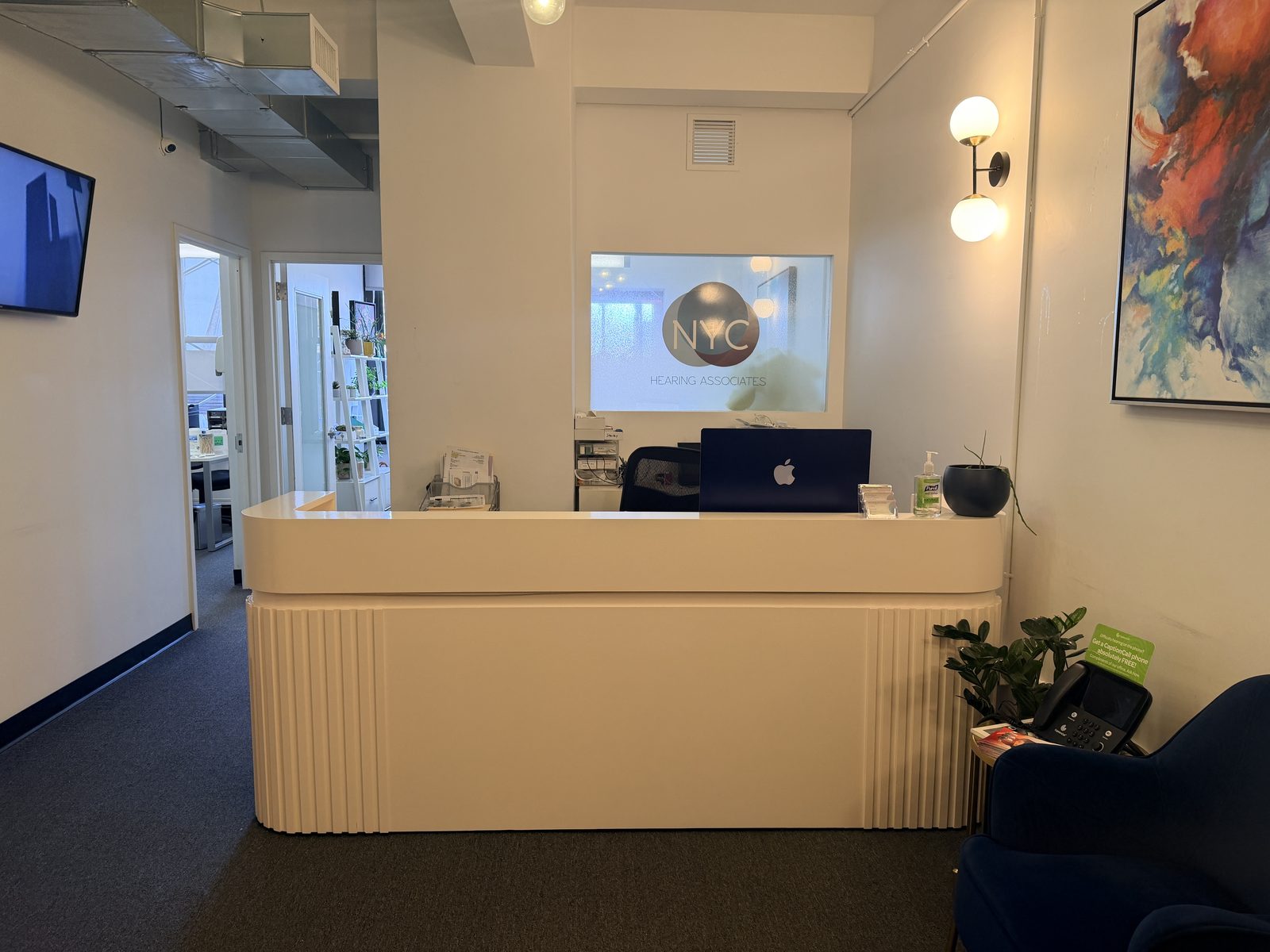
- Midtown West: 110 W 40th St, Suite 500, New York, NY 10018. Phone: 212-354-2360.
- Chelsea: 80 Eighth Ave, Suite 1501, New York, NY 10011 (entrance on 14th Street). Phone: 212-354-2360.
- Upper West Side: 41 W 72nd St, Suite 1C, New York, NY 10023. Phone: 212-354-2360.
- Upper East Side: coming soon. For questions about this location, call 646-422-7661.
- Garden City: 229 7th St, Suite 307, Garden City, NY 11530. Phone: 516-408-3006.
Not sure which office is most convenient? See all locations, or call us and we will help you choose.
Frequently asked questions
Do insurance hearing aid benefits reset on January 1?
Many plans run on a calendar year, but hearing aid benefits often follow their own schedule, commonly once every 36 months. Call your plan to confirm when your benefit renews and whether you have used it in the current cycle.
Can I use my FSA for hearing aids?
Generally, yes. IRS Publication 502 lists hearing aids and the batteries, repairs, and maintenance needed to operate them as medical expenses. Your plan administrator decides what it reimburses, so check with them, and keep your itemized receipts.
Will I lose my FSA money on December 31?
Possibly. FSAs are generally use-it-or-lose-it, but your employer’s plan may offer a grace period of up to two and a half months or a limited carryover. Check your plan year end date and its rules.
Does my HSA expire at the end of the year?
No. Unused HSA funds generally carry over from year to year.
Can you check my benefits before my visit?
Yes. Upload your card on our check your insurance benefits page, or call 212-354-2360, and our team will look into your coverage before you come in.
Sources
- IRS Publication 969: Health Savings Accounts and Other Tax-Favored Health Plans
- IRS Publication 502: Medical and Dental Expenses
- Medicare.gov: Hearing aids
- Medicare.gov: Open Enrollment
- HealthCare.gov: Deductible and Out-of-pocket maximum
This article is general information, not medical, tax, or insurance advice. Coverage varies by plan, so please confirm the details of your own benefits.
